
Sustainable Systems Week 1 – 07/01/20
I consider sustainable systems to be an offer to open your eyes and realize what you’re adding for the betterment of the world or how you’re bringing it’s end near. This subject seems to be very exploratory and giving.
The first week of Sustainable system was totally based on a massive discussion on a variety of related areas like The 3 pillars of sustainability, the 3 Rs, sustainable development, etc.
We began with the 3 pillar of sustainability that is : The Society, The Economics and The Environment. Sustainability and it’s outcomes revolve around these three factors and end up affecting them in various ways.
- The society represents the affect on people. People, of any kind, of any race regardless any differences between them. It focuses on their standards of living, the education provided to them so that the welfare to the world is done, job prospects open to all and other various opportunities open to all. Sustainability pressurizes on the basic needs too of the humans like how it affects their health and safety, ethics and code of conduct, diversification, etc.
- The economics affect the changes, ups and downs in the profits and world economic status. The different aspects here are the growth of the different organisations, the profit earned by them and the cost saving in terms of future perspective. It values economic contribution and relations with the customers so to bring the world together so to save it.
- The environment represents the changes on the planet earth. It refers to changes in natural, resources use, on pollution prevention ways and diversely on bio- diversity. Sustainability focuses to transform the lifestyle of all in an eco-friendly way by different measures like fibre sourcing, renewable energy, energy efficiency and economical mutual targets.
The we discussed how sustainability was different from sustainable development. So here is why:
Sustainability describes a state that is sustainable and is much more specific as it describes a situation where systems and conditions are balanced in such a way that they can continue to exist in the long term. While, Sustainable development describes incremental improvements and changes that aim to achieve a more sustainable situation. It includes interventions which aim to reduce environmental impacts and improve social and economic conditions.
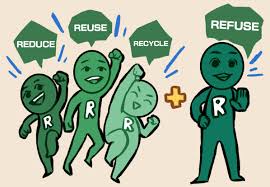
Then we moved our discussion a little further to the 3 Rs.
- Reduce: It is the first stage of the waste hierarchy. The logic behind it is simple to understand – if there is less waste, then there is less to recycle or reuse.
- Reuse: Learning to reuse items, or re-purpose them for a use different then what they are intended for is essential in waste hierarchy.
- Recycle: The last stage of the waste hierarchy is to recycle. To recycle something means that it will be transformed again into a raw material that can be shaped into a new item.
The last stage of the class was to present our personal perspectives on which of the three Rs were the most important to be taken into consideration. Here is what i thought.
According to my perspective Reduce is the step that should be taken into consideration by all, not because it;s the most important step but because it is perfect for all of us as a first step towards sustainability. Reduce is preferable to either reuse or recycle because reducing the amount we use will mean reducing the amount to be reused or recycled to start with. And reuse is preferable to recycle because no additional labor and material is necessary, only our will to reuse it. But to recycle something requires additional labor and often additional material in order to turn the old product into an innovative new one.

 Shreya's Blog