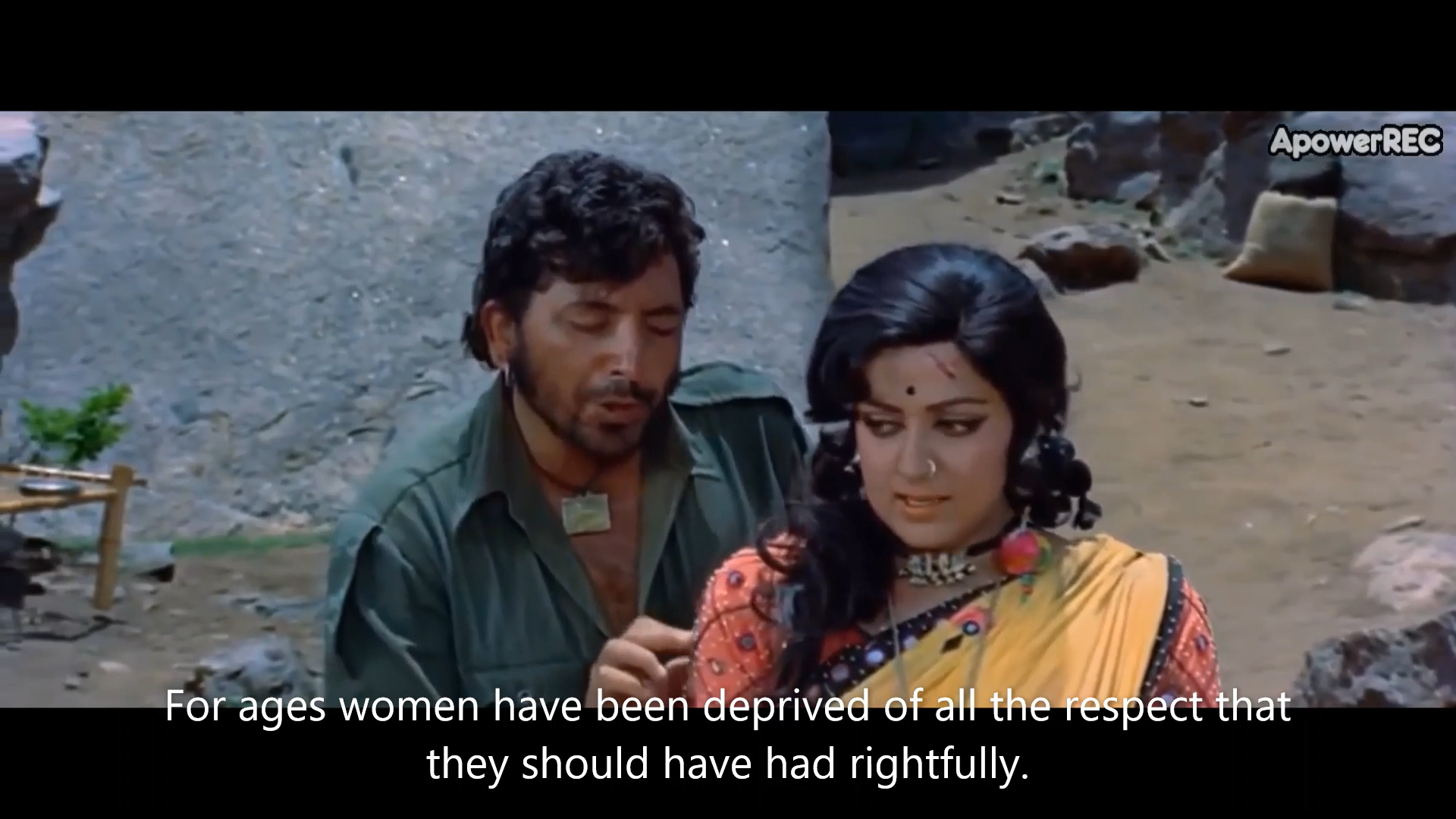
In week 12, we went into a deeper discussion on the era and it’s perspective. We dug a little deeper and focused on what it used focus upon, what it wanted to represent and also, what it rose from. We were given a reminder and a brief too about the submission of the documentation on week 14.
In week 13 we had to dig a little more and then we had a discussion as a class where we conversed on all the era’s and what they offered during their time.
What were the 70’s like for Indian Cinema?
The 70’s were the time period when the world faced the global oil crisis and wars
in China, Pakistan, and Bangladesh. Prime Minister Indira Gandhi declared the
State of Emergency in 1975 and the entire nation was in a dark age. But that did
not stop Bollywood from flourishing. Much of the essence of Indian cinema has
developed across the years and Bollywood owes a lot to the decade of the 70’s
which introduced the genre of parallel cinema to India.
In the period of 1965-70, there was a lot of thematic stagnation in movies in the
sense that musical-romance storylines were the sole player. But then the advent of
underworld crime films, like Zanjeer and Deewar paved the way for mainstream
glamorous Bollywood films- Sholay, Amar Akbar Anthony, Don, etc.
This is where action, drama, comedy were heavily used for entertainment. The
“multi star extravaganza” was popularized, which worked out very well for actors
like Amitabh Bacchan, Dharmendra, Rekha, Hema Malini, Rajesh Khanna, and
Rishi Kapoor, etc.
There was also a kind of global conditioning that happened in the case of Indian
audiences, where western fashion, romance and sexuality were introduced in films.
Rishi Kapoor’s Bobby is perhaps one of the first movies to start portraying
romance openly. Satyam Shivam Sundaram was one of the first movies to represent
human sexuality and desires.
And on the other end you have an entirely novel genre introduced in Indian cinema
by directors like Shyam Benegal, Basu Chatterjee and Mrinal Sen. This is the wave
of Parallel Cinema which focused on low-budget cinema, realistic issues- social,
political, cultural and controversial. Ankur, Mandi, Manthan, Mrigayaa, Bhuvan
Shome, Ek Din Pratidin.Shyam Benegal brought to the screen movies that were beyond entertainment. His
focus was realistic storylines, a biographical aspect, social disparities and
oppression. Mrinal Sen romanticized the conditions of the poor, and portrayed
political issues. These were hard-hitting, impactful storylines who stepped away
from mainstream cinema.Particularly in the works of the above directors, we can see a pattern of greater
acceptance towards strong female characters. Actresses like Shabana Azmi and
Smita Patil did roles that in its entirety, defined the path of the film. They were not
dependent on a male character to build their own personality or story. There was
also more confident talk about social evils in these movies, perhaps because Indian
Cinema had reached a point of popularity where it wouldn’t be shunned just
because a particular group of people were offended.
Directors like Basu Chatterjee and Basu Bhattacharya looked at the opposite end of
the spectrum in the same genre, where they brought forth stories of ordinary
people, familial and marital bonds and human relationships and interactions.
Chhoti si baat, Baaton Baaton Mein, Chitchor and then Aavishkar, Anubhav and
Griha Pravesh respectively were their works. The works by the latter are a trilogy
around the theme of marital discord. The way this problem was handled in the
seventies was very different, clearly showing the evolution in social conditions.
In conclusion, the 70’s were a decade of contrast, which really developed
Bollywood into what it is today. Styles of storytelling and approaching a topic may
have changed, but as they say, Change is inevitable.
Week 14 was our day for submission on the Documentation. We even discussed the iterations for the final submission, what we could add, how we could represent the iteration and some more factors. Here, i have attached my process and then later on i have mentioned my reflection on the process.
Documentation of video
We had divided the work amongst us, so I went with the documentation. The first step to begin the documentation was to decide upon a concept. Our concept for the iterations was a role reversal and Samruddhi suggested to go with the same one for the documentation but I didn’t find it quite convenient because all 5 movies were focused on different directions and it would not have been possible to pick out many clips in order to make the documentation. So I thought to go for a more common element like feminism. The final concept we came up with was the objectification of women in the patriarchal world and how unacceptable it is.
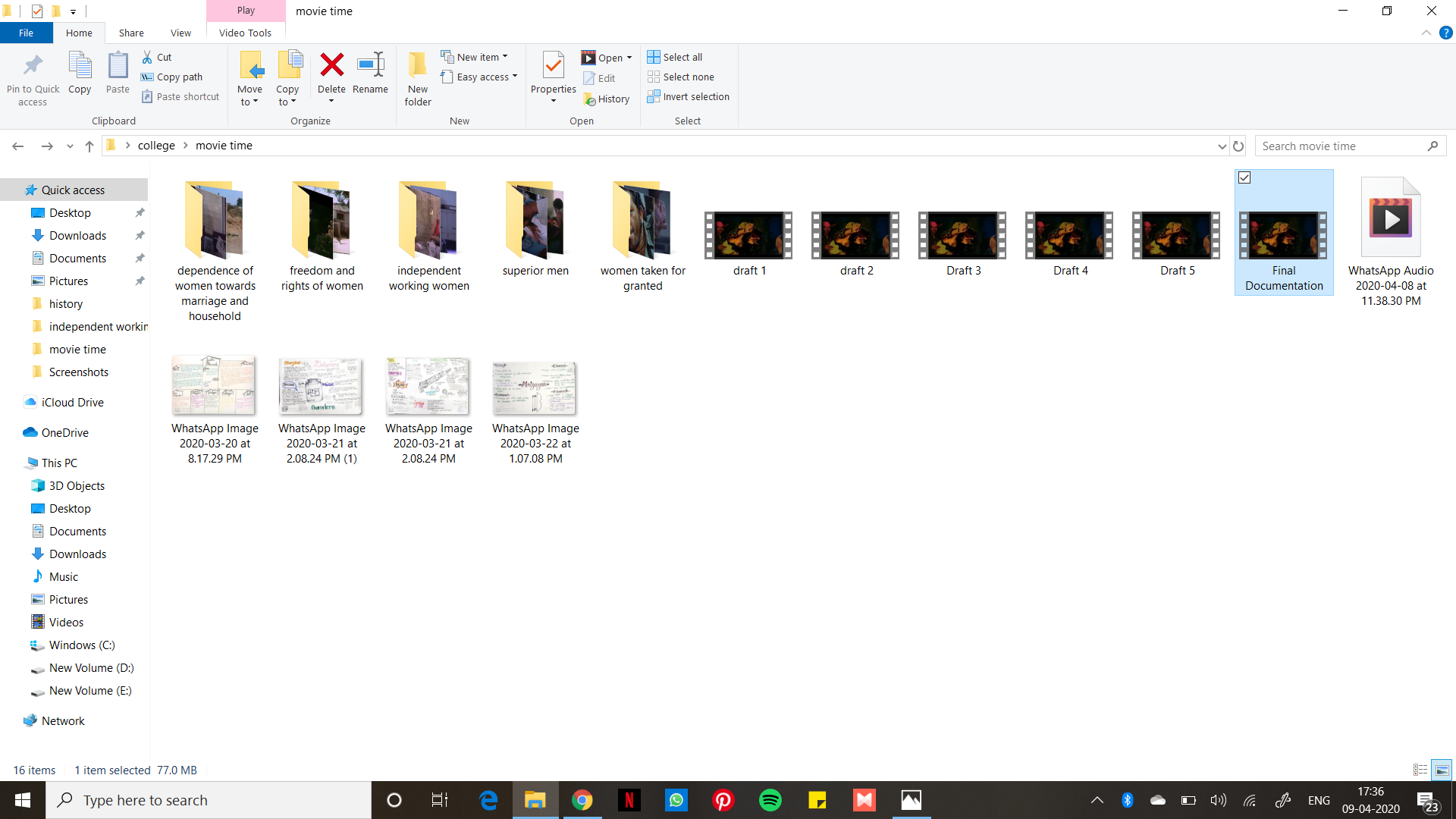
After the finalisation of the concept, we divided the 5 movies amongst all of us to take out clips and screenshots according to the concept. It took some time to collect all the clips and screenshots as everyone was busy with all the work.
- I began from segregating the videos and clips under different categories to sort them according to their placement in the video.
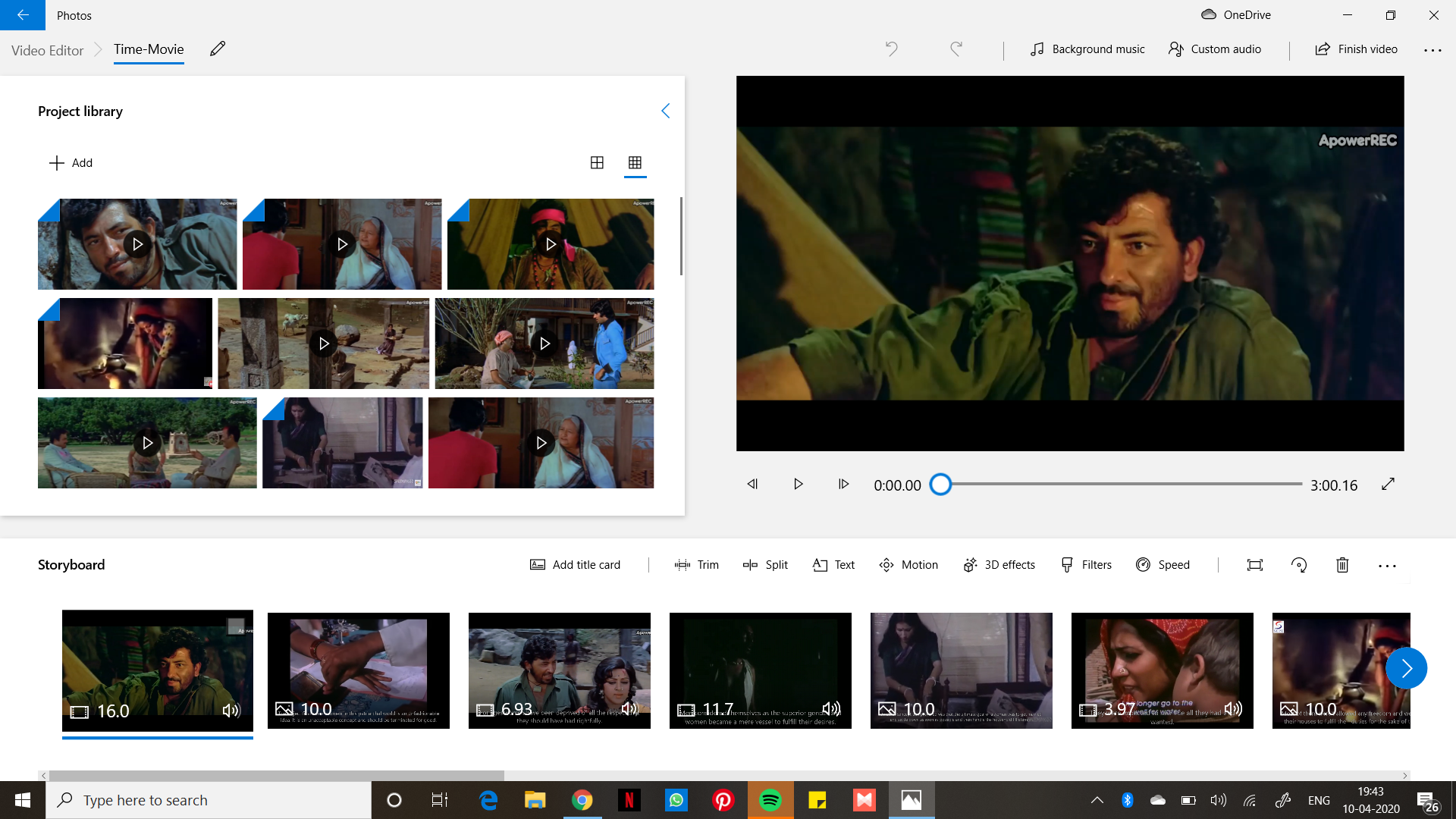
- The thing I did next was to start making the video, I added the clips according to their sequence. I just added the clips to have a rough idea of the video.
- Next, I added the narrative as subtitles in the video. I wrote the narrative by moving from one video to another as they were placed. Their sequence made it easier for me to decide the matter according to their type. I altered the narrative a few times by going back and forth to make it more apt.
- The next step was to add audio files in the video, this was for the still pictures used to add some background music to them.
- The video was ready after this. I uploaded it on the drive and asked everyone in the group to check it out. After watching the video, Samruddhi gave me some pointers for the narrative, I worked on it next. Zarah gave me another suggestion to cut down a video which was from Manthan because it wasn’t really necessary and I did that.
- We showed ma’am the video in class the next day and here came the problem. All of us made a mistake to assume that the time limit for the video was seven minutes and the one I made was of five minutes approx. To correct the video length was the next task. Ma’am suggested trimming down the unnecessary parts from the long clips and speeding up the really slow ones instead of just cutting down some videos and the same was done. I tried my best to trim down as much as possible and at the end, I had to cut down just one small clip. Also, there were some errors in the narrative, they were worked upon too.
- And our final video was ready.

 Shreya's Blog